In June, after a night of flying westward, we moved from the scorching summer into early winter. Outside the window stretched an endless expanse of red earth, with low-rise buildings clustered together, extending from nearby into the distance and blending into the diffused light of dawn. At a quarter past six in the morning, we landed at O.R. Tambo International Airport in Johannesburg. As we stepped out of the cabin, the chill seeped through the gaps in the boarding bridge, sending shivers down our spines. Passengers dressed in summer attire hurriedly opened their luggage, seeking the warmth of additional layers. After clearing immigration, we arrived on this southernmost tip of the African continent just as the sun rose. The sunlight was clear, the air crisp, evoking a feeling reminiscent of a refreshing autumn day. Inside the terminal, people of all races moved like tidal waves. However, Johannesburg was not our final destination—we were headed for the coastal city of Cape Town.

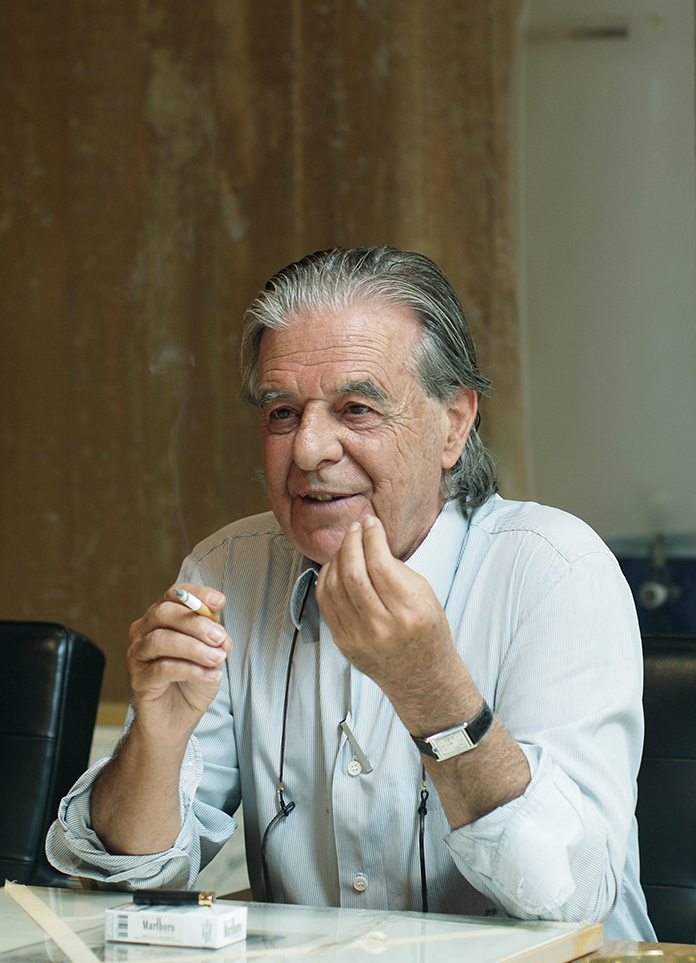
Cape Town in winter is often rainy. Starting from the hillside Dorp Hotel, we went downhill, crossed the blocks, and arrived at the studio of SAOTA, South Africa's renowned luxury architectural design firm, after a mere ten-minute drive. We were greeted by founder Stefan Antoni. Joking about the rainy weather, he said, "I can assure you, Cape Town is truly enchanting on sunny days, but the rain isn't so bad either."

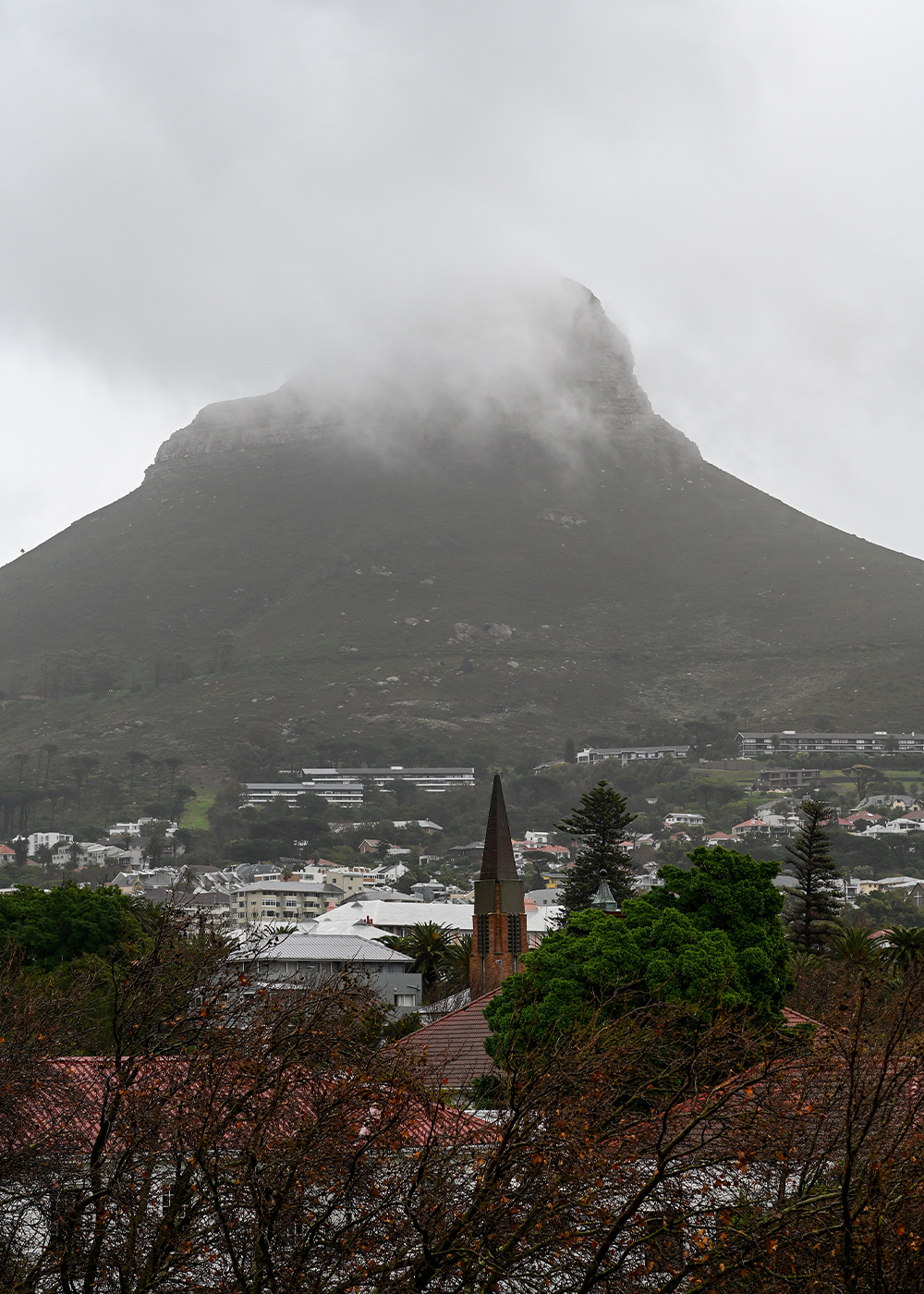
The rain acted like a filter, allowing us to experience a different side of Cape Town. During our visit, raindrops continuously gathered and swelled against the studio's glass windows, only to suddenly slide down, leaving trailing streaks. In the distance, Lion's Head was shrouded in swirling mists, with the city's buildings fading in and out of view, disappearing into the persistent drizzle—chilly yet refreshing.
"Seeing" is regarded by Stefan Antoni as a vital way to gain design inspiration. Even ordinary things—such as a pool of water—create ripples that form patterns, evoke forms, and spark associations. We capture, filter, and process these through intuition, then translate them into a design language that serves our needs. Who knows, they might reappear in your projects in another form someday.

Influenced by the Mediterranean climate, the rain in Cape Town either falls all day long, wetting the ground and interfering with the view. In severe cases, it becomes blurry. Midway, when we tried to go to the Table Mountain trailhead to overlook the city, we had to turn back earlier. Either the weather alternates between clear and rainy, with rainbows suddenly appearing in the sky, or even two at the same time, like two layers in front and back, which is truly astonishing. The ever-changing weather in the bay is truly unpredictable.

Finally, Stefan Antoni said that compared to browsing images on Pinterest for inspiration, he would rather recommend stepping out of the office and experiencing the world. As long as you observe carefully and reflect deeply, these conceptual archetypes derived from the things around you will become an invaluable repository of design material—inexhaustible and ever-abundant. Everything in nature is information, just like today's rain.

On the first day of the study tour, we visited Kloof House, the mansion of Greg Truen, one of the co-founders of SAOTA. This residence, built halfway up the mountain, is embedded into the mountain by taking advantage of the height difference of the site and fully opens towards the landscape, offering a panoramic view of the city in the bay area. The highly distinctive V-shaped structure aims to maximize the borrowing of scenery, allowing the distant towering mountains to also become part of the space, blending the inside and outside.

As night fell, the day's travels melted away amidst soothing music and exquisite food. Greg Truen, the host of Kloof House, warmly welcomed us with a special home-cooked dinner. Colleagues from all corners of the world gathered under one roof, engaging in heartfelt conversations and sharing laughter. Over drinks, we exchanged stories about our latest projects, reflections on the day's itinerary, and our first impressions of Cape Town.

At noon the next day, we arrived at the Upper Albert residence where Philip Olmesdahl, one of the co-founders of SAOTA, lives. It is a garden-style building with the historical features of the local 1960s, standing on the gentle slope at the corner. In line with the terrain, the building is divided into two sections, upper and lower. The part with roughened plaster at the bottom is the underground functional space. As you ascend the steps, the interior suddenly opens up. The public area is freely connected to the external garden, with lush green plants and a wild charm. Beyond the swimming pool lies the boundless cityscape, offering a panoramic view of the distant horizon.

The most eye-catching feature of the residence is the red-toned concrete structure on the upper part. Philip Olmesdahl said that this recreates a period of time he and his family spent traveling in Mexico, making the home an emotional carrier of shared memories for the family. Borrowing views is another feature of the Upper Albert residence. Through various forms of large and small Windows, grilles that adjust the entry of light from the outside, intentional gaps left between the top and the facade walls, and the high-altitude lighting of the passageways achieved through the design of a single-sided arched roof and other detailed considerations, the interior and exterior of the space become transparent, with light and shadow interwoven and the architecture and nature integrated.

Winding along the west side of Lion's Head, the 145 Kloof House, hidden on one side of the mountain, spreads horizontally with its rock-hard facade. Although the vision is somewhat blurred on a rainy day, one can still imagine the magnificent and charming mountain and sea scenery on a sunny day. Following the staircase on one side, the open public area, based on the best view, arranges the functional areas with social attributes in a row, complementing each other. The sculptures, art paintings or photographic works inside not only showcase the owner's taste but also become the main characters of the space, elevating the theme.

As night fell, Stefan Antoni and Adam Court, the design director of OKHA, a high-end furniture brand under SAOTA, joined us at 145 Kloof House after a day's work. The three days of close communication and interaction with SAOTA have enabled us to absorb valuable design nourishment and gain a new understanding of design practice. During the meal, Stefan Antoni said passionately and excitedly, "Love life. Yes, it will always be the meaning of our lives."

Leaving Cape Town temporarily, before nightfall, we arrived at the Bosjes Estate, which was originally built in 1790 and rebuilt by the Cape Town architect Tiaan Meyer. The architectural complex with a distinct colonial style is located in a long and narrow plain area, backed by the Matroosberg Mountain and facing the Hawequas Mountain, and is laid out in a parallel and elegant posture.

The central axis, and the only main access road, is flanked on one side by neatly pruned grapevines. In this season, most leaves had already fallen, leaving only bare branches that evoked the stark beauty of winter. On the other side, a carefully designed farm landscape unfolds—lush, layered plants arranged meticulously along the path, creating a striking contrast. As the sunset faded, the surroundings grew still and empty, with only the chirping of insects and birds breaking the silence.

The African Contemporary Art Museum (Zeitz MOCAA), converted from a barn, is an important public building in the V&A Waterfront business district. To the west of the main entrance of Zeitz MOCAA is a square paved with granite, which serves as a buffer zone on the traffic flow and is also the most public venue.

MORE PHOTOS