Interweaving the lyrical craft of Kochi with the restless kinetic energy of Tiruppur, the Sabari Gold & Diamonds store, designed by Kochi-based Parinamah Architects, unfolds as a quiet, soulful retreat from the city’s rhythmic pulse. Rooted deeply in the jewellery brand’s philosophy, the space reflects the belief that each creation carries the soul of the artisan who shaped it. For Sabari, jewels are more than mere adornment; they are stories, poems, memories, and living heritage crafted to be passed on through generations.

In a decisive departure from high-inventory jewellery retail, the space displays only fifteen curated pieces. This deliberate limitation became a powerful design catalyst, transforming each jewel into a singular artefact deserving of its own architectural moment. Nothing here is treated as stock; every piece is honoured as a masterpiece.

As you enter, the entrance serves as the Mahadwara (Great Gateway), the threshold between the mundane world and the sanctum. Crafted in weathered Corten steel, the door mimics the sculptural depth of Tanjore temple portals. It is etched with motifs of devotion and time. Punctuating the surface are coins from the client’s personal collection, arranged in patterns inspired by Kolam (sacred floor art). This integration ensures that the client’s own legacy is physically embedded into the very first touchpoint of the store.
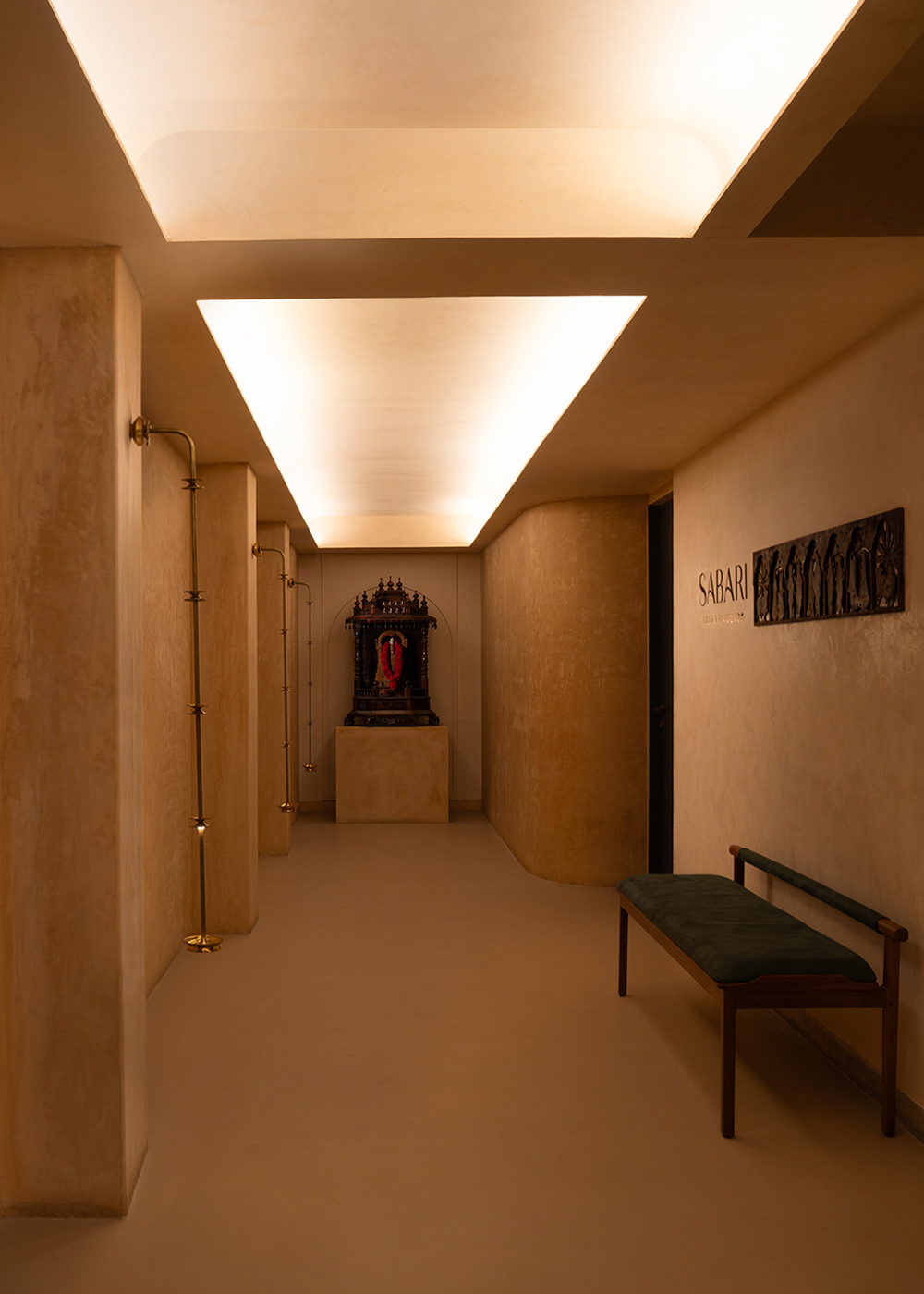
Traditional temples use murals and reliefs to tell sacred stories. Upon entering on the entrance alley in the wall, the storytelling is rendered in metal. A Corten steel relief depicts the wedding of Lord Shiva and Goddess Parvati. As the ultimate symbol of union, it reinforces the "Kalyana Mandapam" concept, lending a timeless, divine atmosphere to the experience.

Just as the pitha (pedestal) of a temple hall serves as the stage for the wedding of the deities, the Experience Centre is designed as a singular focal point. It represents the permanence of the brand’s legacy against the fleeting nature of trends. All distractions are filtered out, ensuring the "union" between the wearer and the jewelry happens in a state of absolute focus.

By placing a monolithic stone table at the heart of a circular floor plan, the layout dictates the movement of the visitor. The table is a direct nod to the Shilpa Shastras, where deities are carved from a single "living" rock. Its raw, heavy, and textured form provides a grounding contrast to the delicate, shimmering gold pieces placed upon it.

The layout utilizes curved lime-plastered walls to mimic the Pradakshina-patha (circumambulatory path), slowing the visitor's pace into a meditative state. “The flow supports our everyday operations, while the ambience invites clients to slow down and connect with our handcrafted gold,” Prashant notes. “Walking into the lounge for the first time genuinely took our breath away.” Here, the absence of sharp corners and the rhythm of the arches create a fluid movement that slows the pace of the visitor, transitioning them from the bustling streets of Tiruppur into a meditative state.

In a temple, light is directional and purposeful. The automated lighting system in the store mimics this, revealing the jewelry only as one approaches, much like a priest bringing a lamp (deepam) closer to a deity to reveal the intricate details of the form. This creates an atmosphere of "quiet magic," making the selection process feel less like a transaction and more like a discovery. ‘THALAAM', the custom lampshade is fashioned from the Elathalam, a traditional bronze percussion instrument used in Kerala’s Chenda Melam. By repurposing a musical instrument into a light fixture, the design honors the "rhythm" of South Indian culture. These fixtures cast a soft, focused glow, illuminating the jewelry like a sacred offering.
MORE PHOTOS
