In a city like Kyoto, which is enveloped by layers of time, buildings are not merely containers of space; they are also physical carriers of memories and lifestyles. When a townhouse with a history of over a hundred years is reopened, the design is not simply a simple update; it is a dialogue with time. The aging marks on the wooden beams, the repeatedly repaired structures, and the lingering light in the deep spaces all seem to be telling the story of the building itself.
When discussing the Nazuna Kyoto Higashihonganji project, Studio ALUC informed us that they aimed for this space to leave a lasting and subtle impression on the users, rather than a fleeting and intense one - perhaps a quiet sensation brought about by the light, materials and space. When this experience begins to enter people's memories, the project is truly completed.
“Nazuna Kyoto Higashihonganji” is a renovation project of a Kyoto townhouse (machiya) that has stood for over 100 years, located on the main street directly in front of the Goei-do Gate of Higashi Honganji Temple.
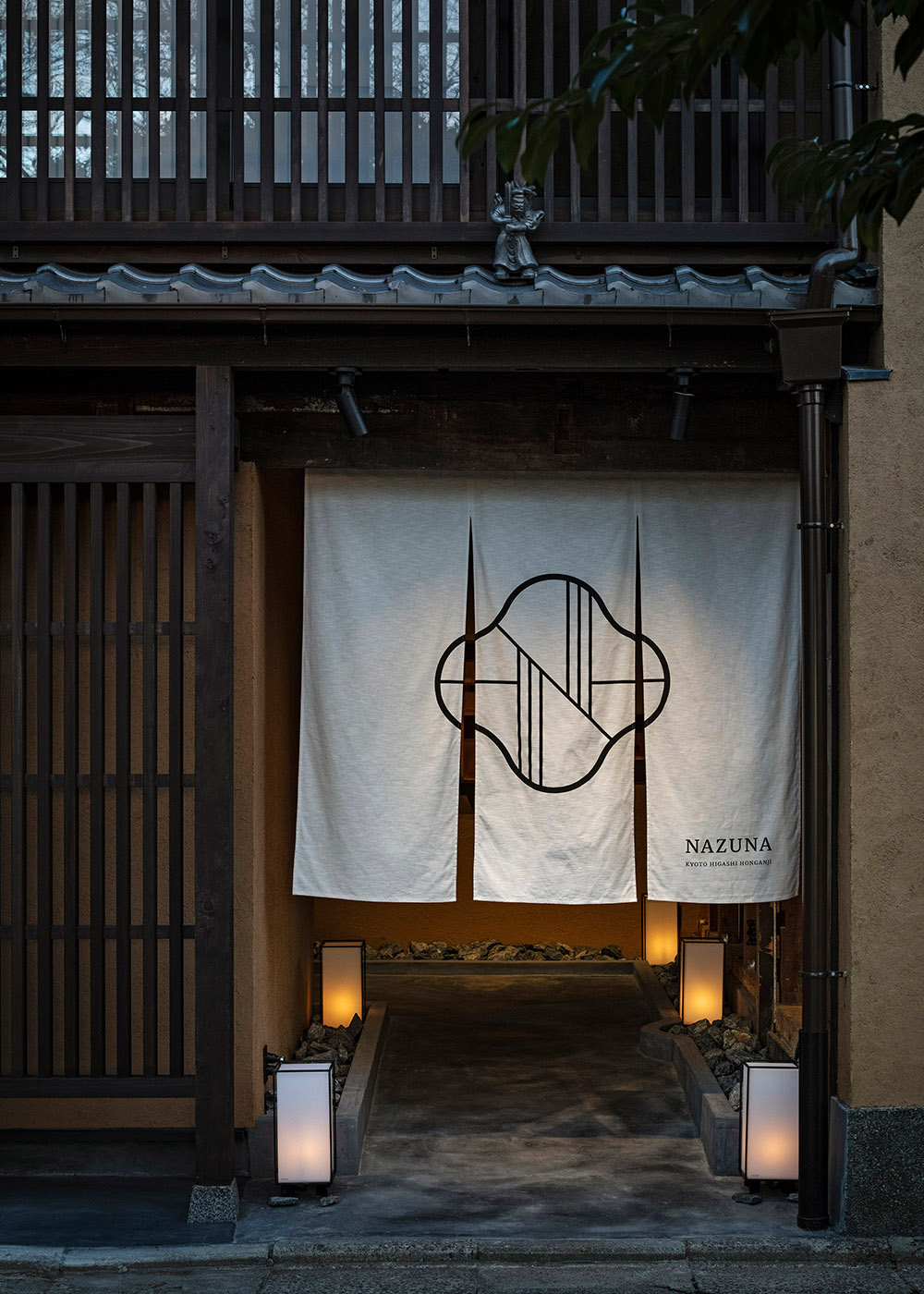
This machiya consists of two buildings, originally separated into east and west wings, which have now been connected by a roof. The structure bears the marks of numerous renovations over the years, blending old and new elements. During the dismantling process, as we uncovered the history of the building, we found structural weaknesses that had developed over time. Reinforcements were made to ensure its stability, while preserving as much of the original wooden construction and finishes as possible. The points where carpentry from different eras meet reveal a unique beauty and charm.
In the west wing, the original earthen floor (doma) was preserved, and this area now connects to small courtyard gardens (tsuboniwa) located in the north and south of the east wing. The dining area and lounge are adjacent to the courtyards (tsuboniwa), designed to bring in abundant natural light, despite the challenges of lighting in a traditional machiya. Climbing the steep stairs typical of machiya, one enters a long corridor with a high, sloped ceiling. At the end, the low-hanging beams, so close that an adult must duck to pass, evoke the craftsmanship of the past.
The three rooms on the second floor of the west wing offer views of Higashi Honganji Temple through the cherry blossoms. These rooms also feature large hinoki cypress baths, allowing guests to enjoy the scenery while soaking. The attic in the bathroom area has exposed roof boards and earthen walls from the original construction, offering a glimpse of the carpentry techniques from that time.
On the first floor of the east wing, two rooms feature an alcove (tokonoma), made from reclaimed materials, with art inspired by traditional carpentry. The open-air baths next to the beds seamlessly blend with the view of the courtyards (tsuboniwa), offering a serene and private connection to nature. The two duplex rooms, spanning the second and third floors, evoke the feeling of traditional machiya earthen floors and living spaces. On the third floor, accessible via a chest of drawers staircase (tansu), a spacious bathroom with a hinoki cypress bath has been created, offering an open and relaxing atmosphere.
With deep respect for the machiya and its cultural heritage, this project aims to create a space where visitors can feel the passage of time woven into Kyoto’s rich history. The new design harmonizes with the old, creating a tranquil retreat for guests. We hope this inn will serve as a bridge, connecting Kyoto’s cultural legacy to the future, leaving a lasting impression on all who visit.
公开 不公开