Metalworking is the resonance between the hammer and fire, and it is a long and profound dialogue between the craftsman and time. To forge a silver pot, one needs to strike with a total of one hundred thousand blows - each strike is the subjugation of the shape and the cultivation of the heart. Let the metal shed its impurities in the intense heat of the fire and grow a warm glow through repeated hammering. What supports these hands in making ten thousand such movements is the almost "foolish" preference for the ancient craftsmanship.

Pushing open the door feels like crossing a threshold in time – outside, the hustle and bustle of traffic; inside, a serene world where hammers rise and fall, and golden light flows. This is MIXI · Tea-Vessel. A composite space where intangible cultural heritage and contemporary life intertwine, guided by tea and anchored by the soul of metalwork.

The design team has thoroughly fused the core theme of "metalwork" into the very fabric of the space. Outside, the hard copper-effect paint engages in a wonderful dialogue of hardness and softness with the warm, textured washed stone. The striking bronze-gold form serves not only as a guide but also as a silent ritual, ushering one into the world of intangible heritage.

Stepping inside, the spatial rhythm unfolds slowly. The ground floor lobby cleverly employs a technique of "initial restraint followed by release" – the central atrium soars high and open, while the seating areas by the windows are low and intimate. Wherever the eye lands, bronze-gold spreads in different forms – framing doorways, inlaying walls, integrating into custom furniture. They glow with a warm luster under the light, each element resembling a breathing piece of metalwork.
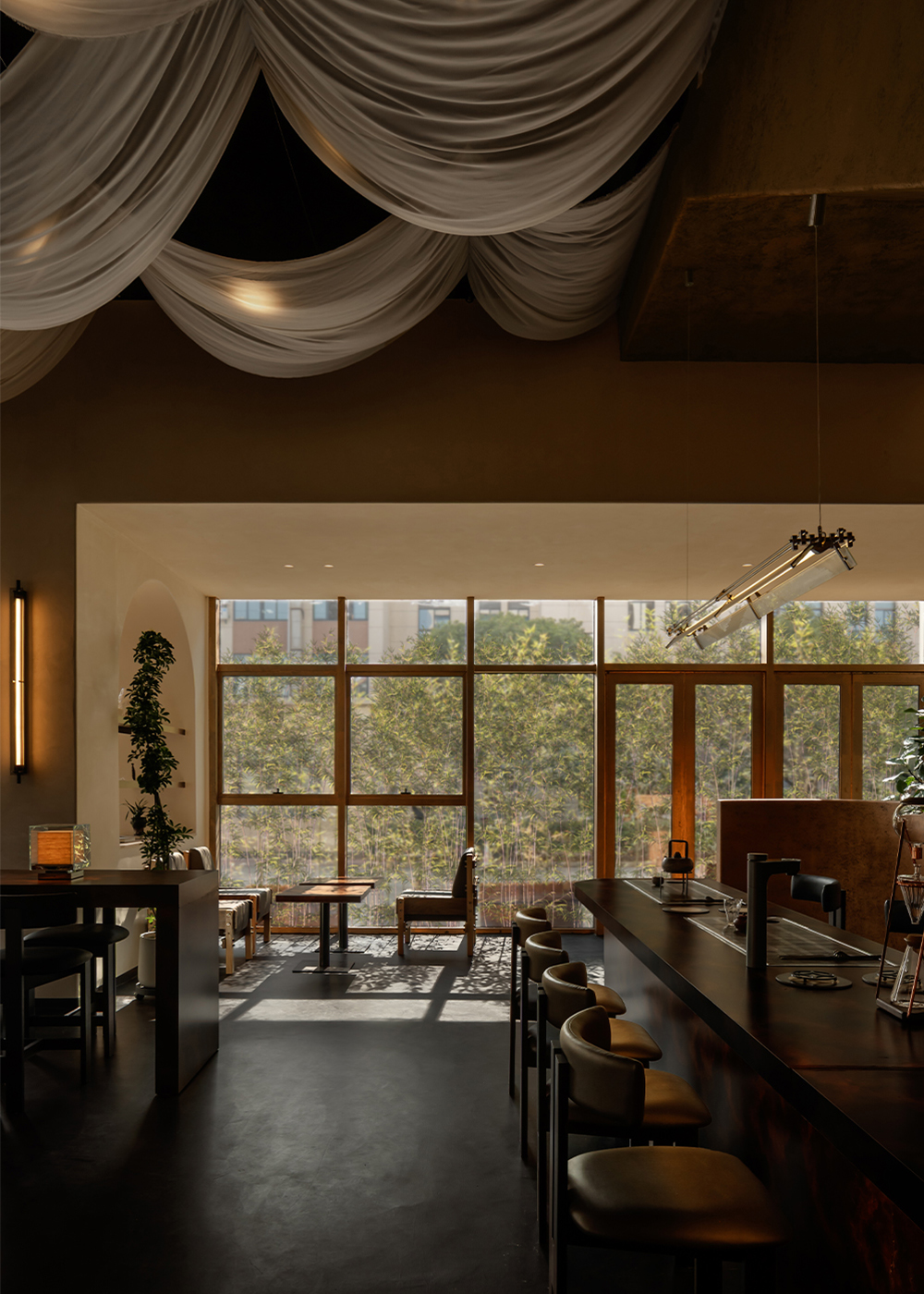
Here, drinking tea becomes a medium to perceive craftsmanship. Metalworking skills are not confined to display cases but naturally inhabit every corner of the space in the form of utensils, ornaments, and art installations. Architecture, furniture, plants, even the background music – all elements are meticulously harmonized yet appear effortless, jointly creating an organic Zen aesthetic. Touching the mottled surface of bronze objects, one feels not just the marks of time, but the accumulation of warmth and life stories from countless artisans.

Deep within the space, an installation light box, resembling an object from the heavens, hangs above the staircase. It unfurls like a slowly opening imperial edict, or like the lightly curled silver sheet when the master craftsman begins forging a silver pot by hand, injecting fluidity and imagination into the space.

Ascending the stairs to the second floor, one encounters a transmission space evoking traditional architectural forms. Naturally shaped stepping stones and solid walnut long tables create a relaxed atmosphere, akin to old friends chatting under the eaves. More ingeniously, a retractable sunken hearth for tea simmering is integrated into the center of the tatami. Imagine a cold winter's night, a few friends gathered around, the crackle of charcoal, the aroma of tea – warmth and coziness coalesce in that moment.

The deeper story of MIXI extends far beyond aesthetics. The founder, Mr. Xu Guocheng, as a representative inheritor of the gold and silver forging technique, consistently carries a sense of social responsibility. He hopes that through teaching his skills, he can not only ensure the continuation of the millennia-old metalwork tradition but also open a window for special groups, helping them master a craft, integrate into society, and realize their own value.

At MIXI, traditional metalwork is no longer forgotten history; it becomes present-day life – drinkable, touchable, learnable, and feelable. It proves in a quiet and warm way that true heritage transmission lies in allowing ancient techniques to regenerate irreplaceable value and charm within contemporary life.

MORE PHOTOS