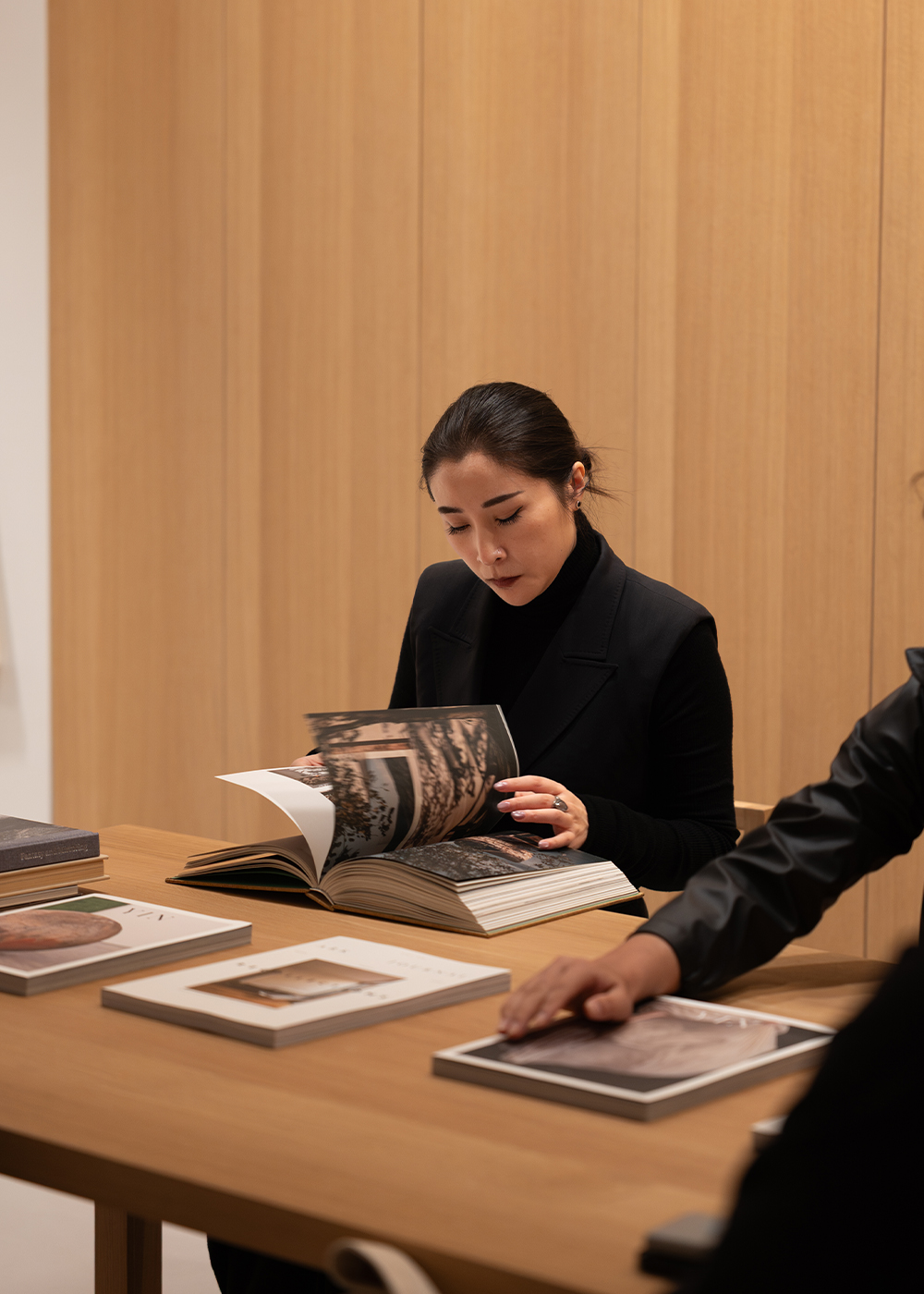
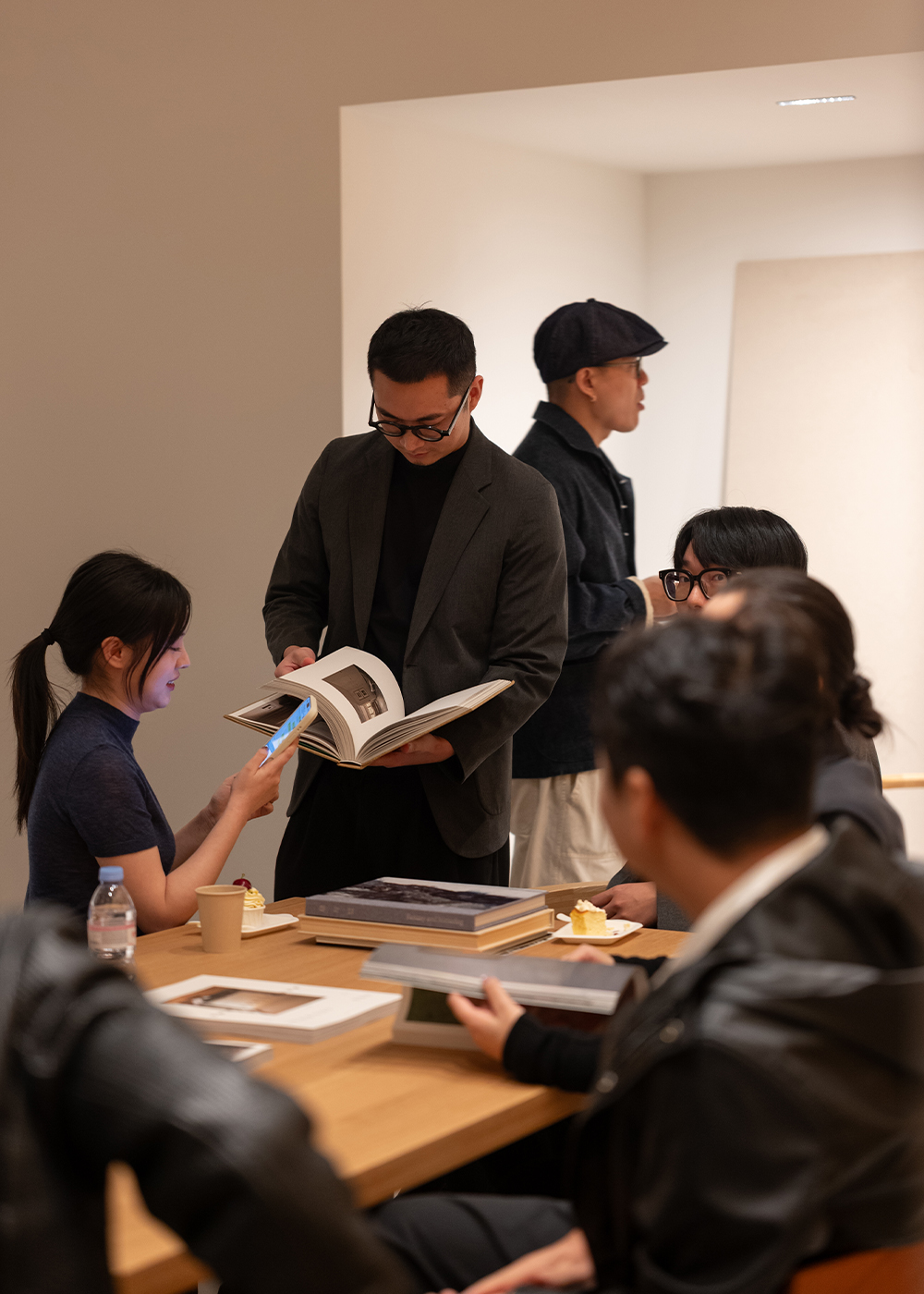
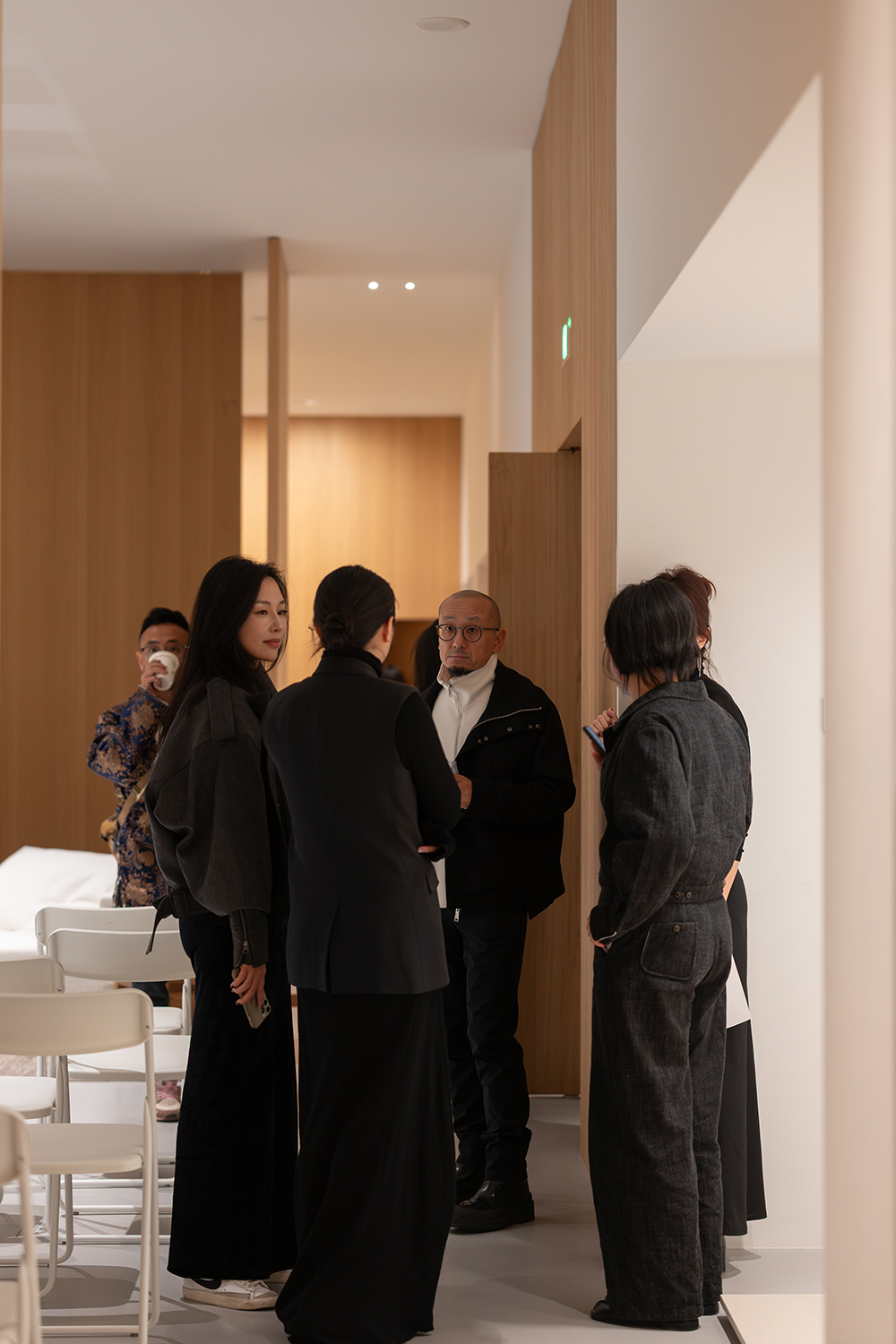
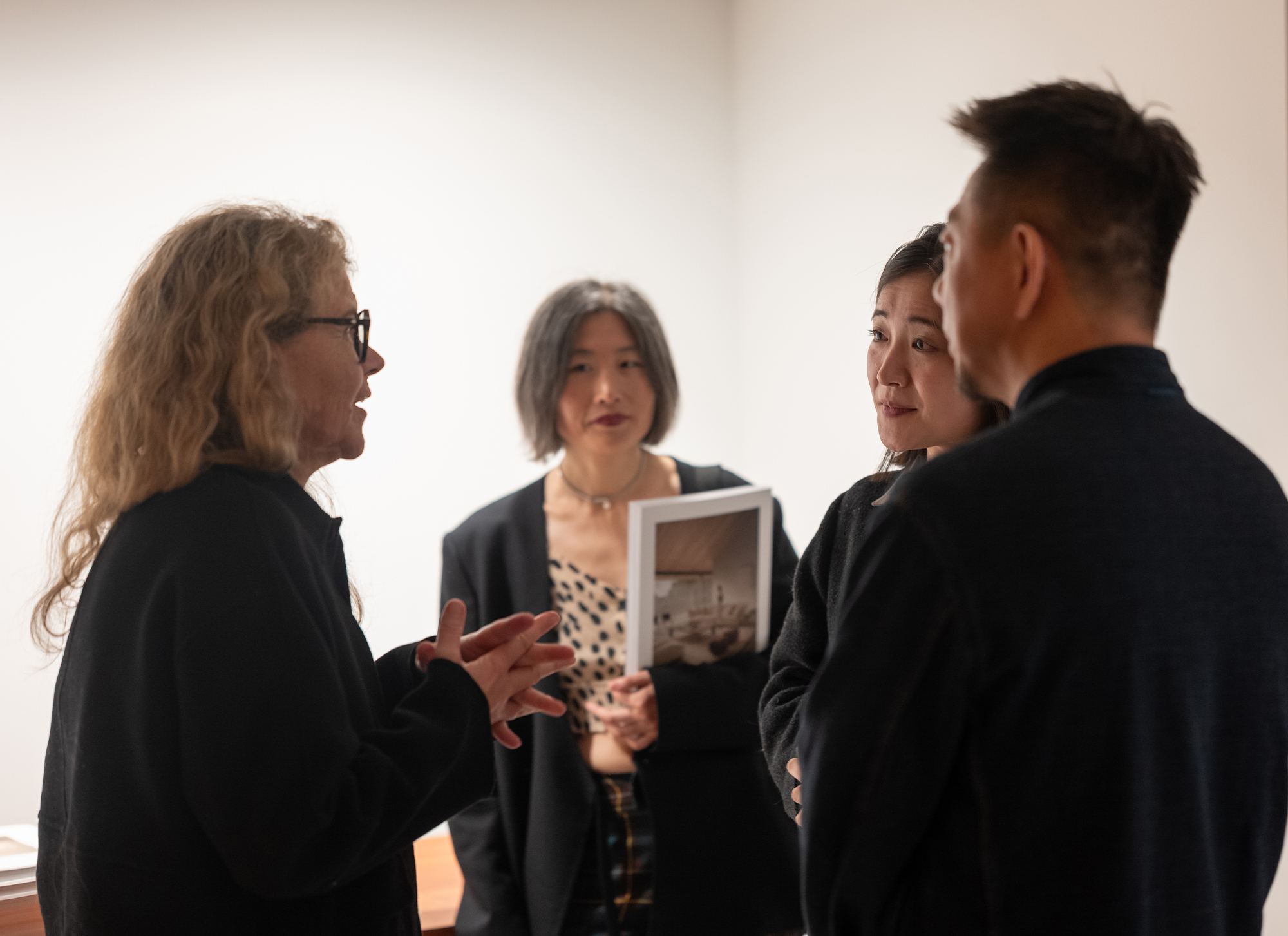
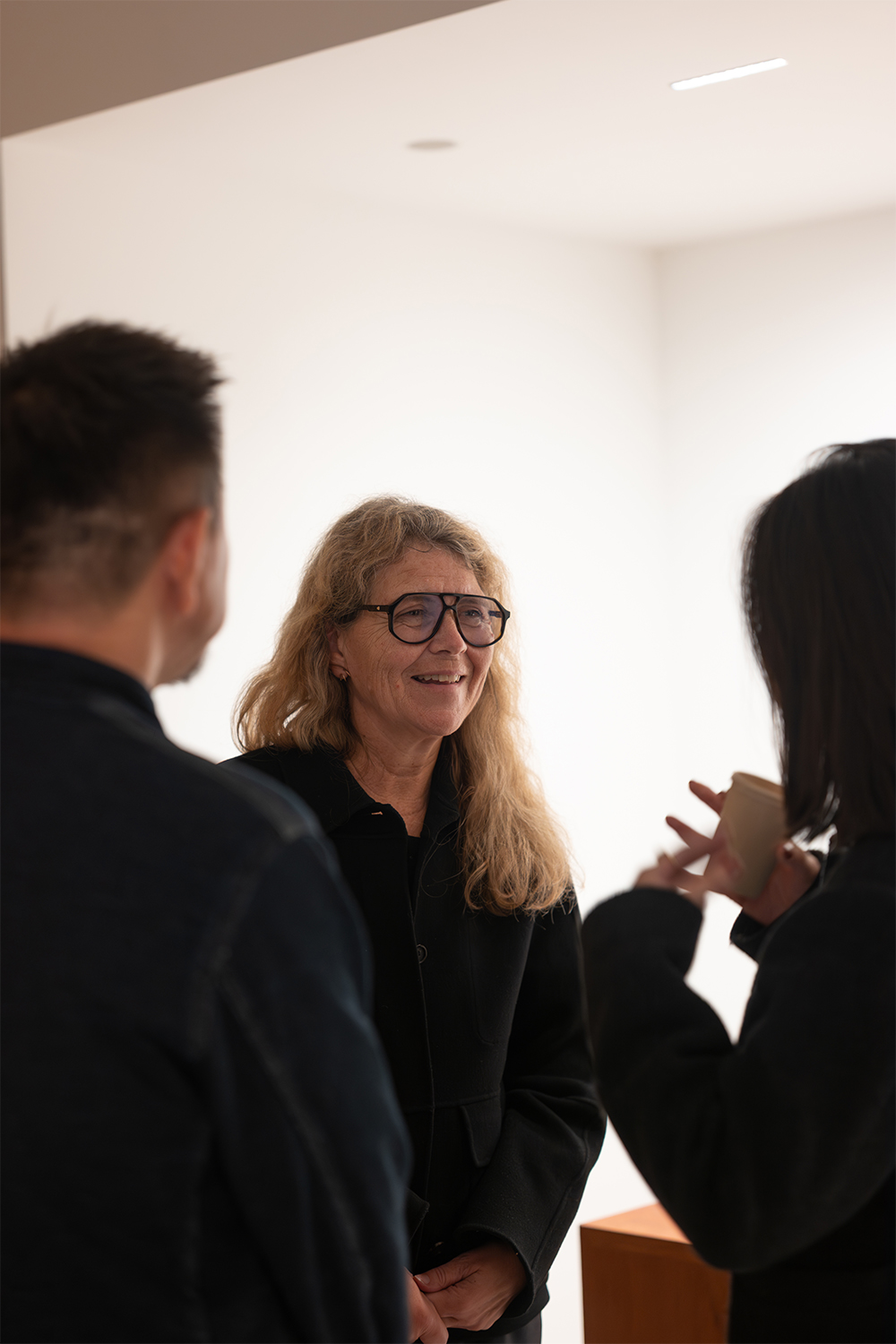
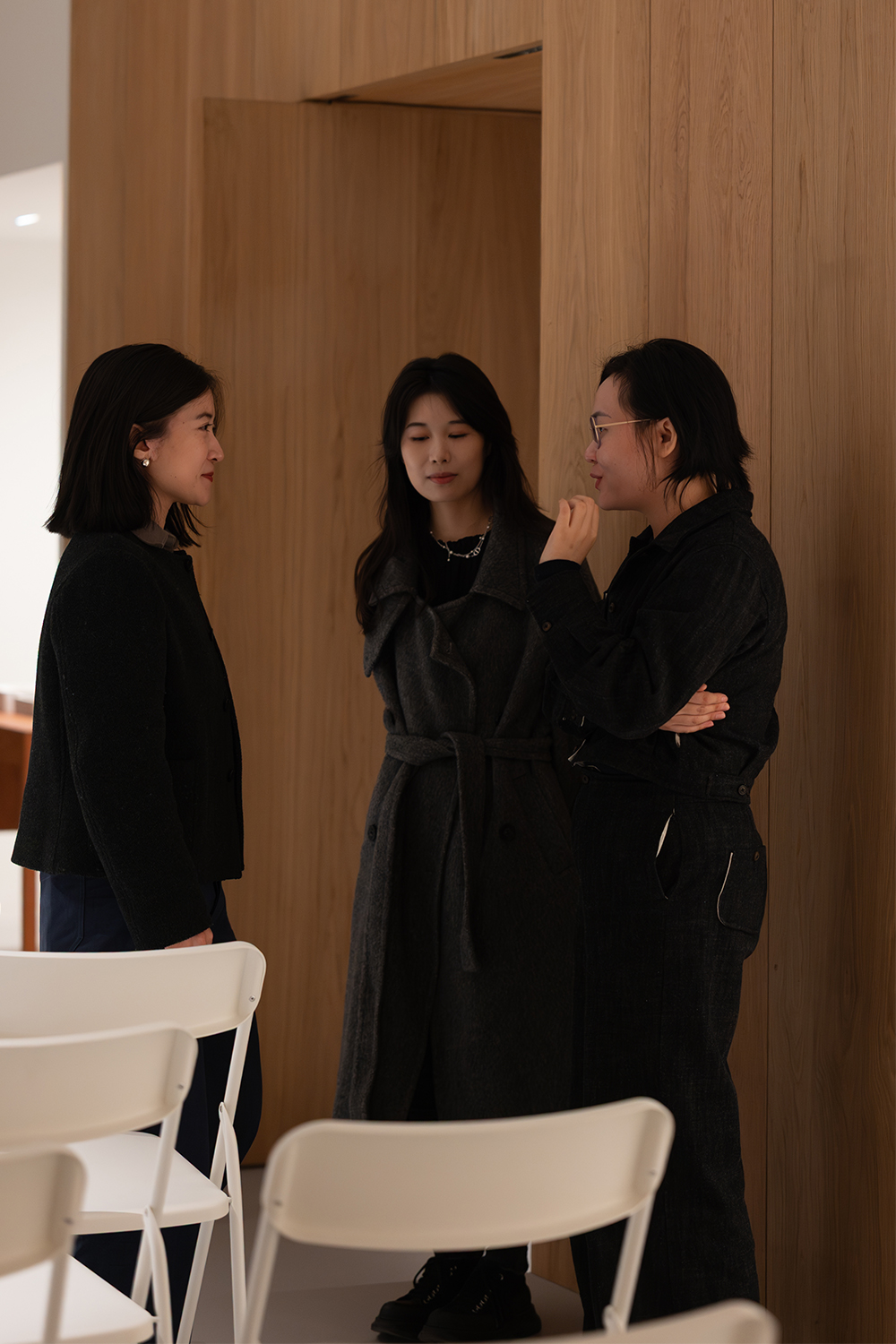
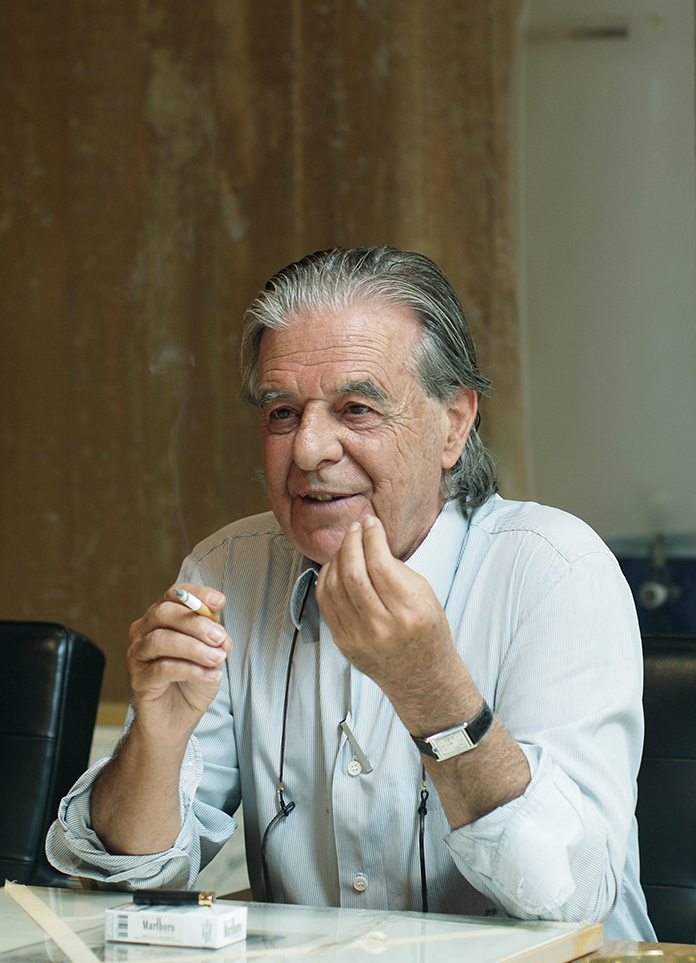
In the quiet days before the West Bund Art & Design Fair opened, we gathered at Limn Space for an intimate event titled The Nordic Way. Our guests were Mette Barfod, founder and editor-in-chief of Ark Journal, who had traveled from Copenhagen; ceramic artists Li Hua and Jiang Maxiang; and Zhi Hongxin, founder of Yiji. Together, they explored the restraint, honesty, and everyday sensibility associated with Nordic life, and their connections with a sense of place, an awareness of materials, and a spiritual dimension in Eastern creative practice.
At an unhurried pace, the conversation turned to lived experience, the logic of materials, making by hand, and a sense of place. We spoke, too, of the hands behind each work and the air, time, and rhythms surrounding it. While the exhibition presented the works to the eye, this evening traced how they came into being: the development of ideas, the warmth that grows through making, and the deeper patterns of daily life. Nordic aesthetics and Eastern craft drew quietly closer, revealing the commitments shared by their makers.
Mette Barfod, editor-in-chief of Ark Journal, began with everyday life in the Nordic region to describe the foundations of Nordic aesthetics. In her view, “In Denmark, beauty and function do not need to explain themselves to each other; they coexist naturally in everyday life.” Design, as she described it, is an honest approach tested through use: it begins with the nature of materials, takes daily life as its measure, and stands the test of time. She also spoke of hygge: “It is an atmosphere, rather than a style, that invites people to pause and feel at ease in a space.” Light is equally essential. “We hardly ever draw the curtains. We let the light in and allow it to change the mood of the room.” Living with natural light speaks to the restraint, quietness, and respect for daily rhythms often found in Nordic design.
On sustainability, she offered a thought rooted in Nordic philosophy: “True sustainability means that an object can be used naturally over a long period of time.” The same idea informs the editorial perspective of Ark Journal, which considers spaces, objects, and people as parts of a larger story. “We document how ways of living shape spaces, and how spaces, in turn, shape the way we live.” This perspective across architecture, craft, and art brought the Nordic emphasis on honesty into sharper focus.
Zhi Hongxin, founder of Yiji, has long grounded his practice in the land and in everyday life. “We are a team shaped by the land and culture of Southwest China. Chongqing’s rhythm is our rhythm; it has a natural sense of ease,” he said. This closeness to daily life has become part of Yiji’s character. For him, “naturalism” is an approach he has followed for more than twenty years: “Let materials be what they are. Space should not steal the scene; life takes the lead.”
Zhi shared that many of Yiji’s projects begin with a visit to the site, seeking to bring the design into close dialogue with its surroundings. The team works across planning, architecture, landscape, interiors, and furnishings, gradually drawing out the character of a space. “A good space is not simply drawn; it grows with time.” For him, a space’s value lies in how genuinely it can be used: “Space is made for living, not for the camera. A good object, too, needs to be felt by hand, not merely seen on a screen.” This attention to everyday life resonates with the Nordic emphasis on honesty and rhythm.
Li Hua, an artist who has also taught for many years, centered her remarks on materials. She studied at Jingdezhen Ceramic University as both an undergraduate and a graduate student, receiving a grounding in China’s arts and crafts tradition. There, she learned about the behavior of clay, ceramic techniques, material properties, and methods of making. She shared that this foundation later gave her greater freedom in her own practice. Describing her move from technical training toward artistic creation, she said, “I don’t plan my works entirely in advance. They emerge gradually as the materials, temperature, and process change.” She pays close attention to the state of the clay: “The clay tells you what shape it wants to become.” Rather than seeking complete control, she lets humidity, climate, drying time, and temperature leave their marks on the surface. To her, those marks are the material’s own language.

Ceramic artist and wood-firing practitioner Jiang Maxiang spoke of his relationship with materials. He began studying ceramics at the China Academy of Art in 2002, completed both undergraduate and master’s studies in the field, and is now pursuing studies in the philosophy of art. He said he “spent ten years learning the craft” and has since been “trying to forget it.” By this, he means setting aside some of his own control so that material, fire, and time can play a fuller part in the work. He referred to the story of Carpenter Qing in Zhuangzi, in which the maker lets go of self-consciousness to become attuned to his material. His teacher Chen Songxian once told him that fire lies at the heart of ceramic art: “If you can bring out the fire, that is enough.”
He added, “A crack, too, reveals the material’s true nature. It is not a mistake.” This truth goes beyond the material’s physical state; it gives the work a sense of life. “I’m not making the work,” he said. “I’m waiting for it to appear.” To him, a ceramic work emerges through fire, clay, temperature, and time. It belongs in people’s lives and inner worlds. Its value lies in the singular traces left by natural forces: the path of a flame, changes in the clay, and the passage of time. Seeing nature as a collaborator brings his vessels into dialogue with Nordic ideas of material honesty and respect for time.
During the open discussion, questions moved between different perspectives and took the conversation about materials and everyday life further. Mette said that her understanding of Asian cultures continues to grow, but one thing felt unexpectedly familiar: “When it comes to materials, craft, and history, the sensibilities of China and Japan are surprisingly close.” She was speaking of a shared sensitivity to texture and rhythm that runs deeper than style.

Zhi Hongxin approached the question of what makes a space feel comfortable through lived experience: such a space “grows out of life; it cannot simply be designed into existence.” Asked about the future of ceramics, Li Hua observed that a ceramic work takes time because “failure is part of the process. Its real value often lies in time, experimentation, and trying again.” Jiang Maxiang returned to the materials themselves: “The life of a vessel lies in the part that cannot be replicated. Those are the traces left by fire, time, and nature, at the heart of what makes handcraft irreplaceable.”
These responses, drawn from different backgrounds, arrived at a shared understanding: creative work gains its value through sensitivity to materials, room for failure, and qualities that cannot be reproduced. This common ground encourages YINJISPACE to continue hosting small, intimate gatherings for deeper exchange. Through conversations across cultures, materials, craft, and lived experience, we hope to create a place where practitioners can see one another’s work more clearly, and where audiences can come closer to ideas and objects made to be part of life.
Our sincere thanks to Limn Space for welcoming this conversation into a setting that felt quiet, attentive, and close to the materials around us. YINJISPACE hopes to continue these exchanges at a pace shaped by beauty and everyday life, giving more thoughtful and sincere creators a chance to be seen, understood, and connected.