Rooted in Assamese culture, it reflects a desire to preserve not only cherished objects and traditions, but also the quiet rituals and simplicity of everyday living. Through acts of curation and remembrance, Hêpah becomes a home where memory and modernity coexist, each lending meaning to the other.
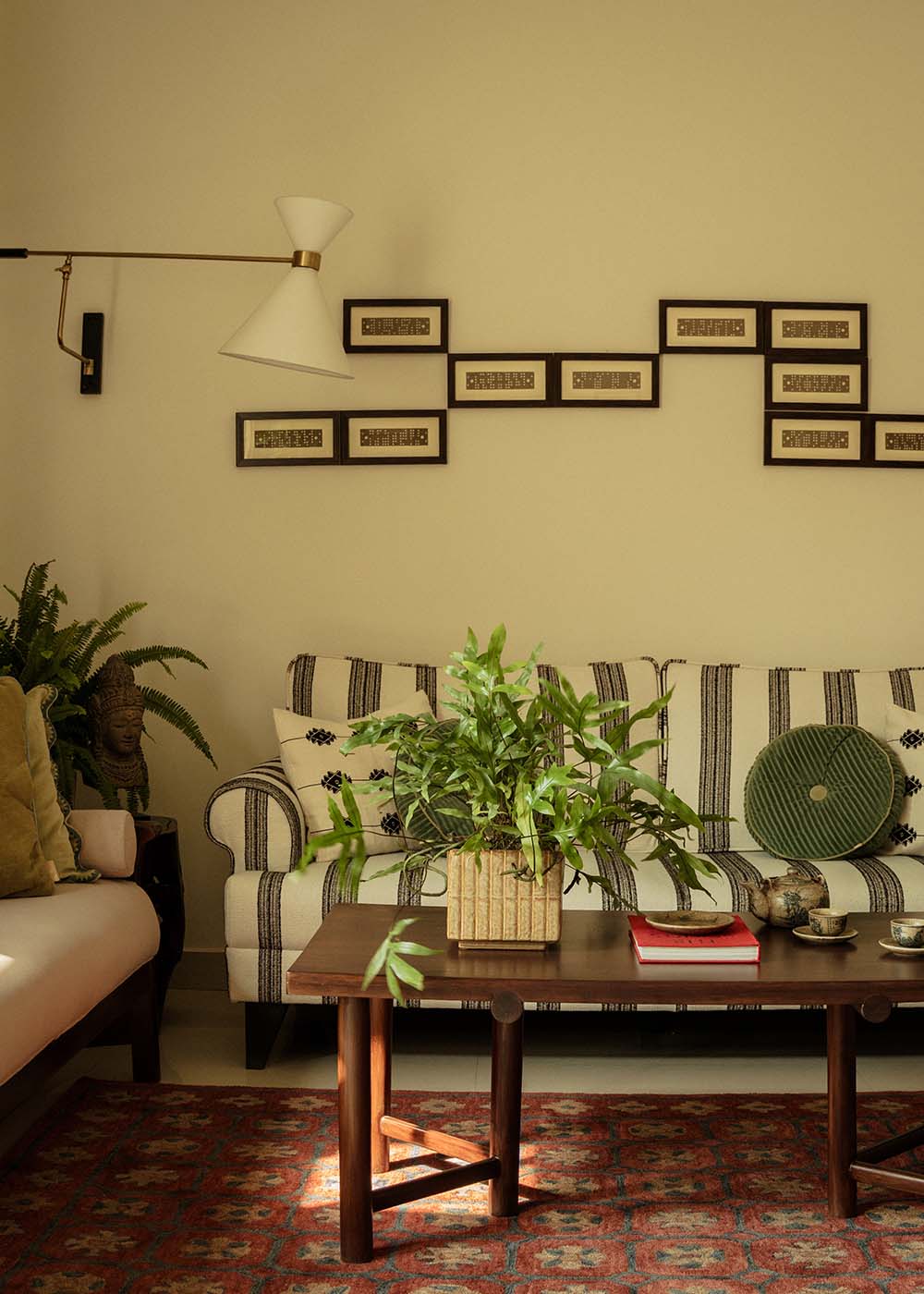
The living area acknowledges Assamese craft through traditional weaving punch cards, reassembled as an evolving composition that celebrates the region's handloom traditions. Alongside them, a side table carved from a single tree trunk anchors the space with a sense of permanence, while contemporary seating reflects the family's embrace of the present.
At the heart of the home, a salon-like gathering space evokes the familiarity of a traditional parlour; an informal setting where stories, objects, and memories naturally accumulate over time. A sleek wooden console displays travel mementoes, collected artefacts, and artworks created by the children, while a humble moda finds its place as a footrest, recalling the unassuming simplicity of everyday life.